

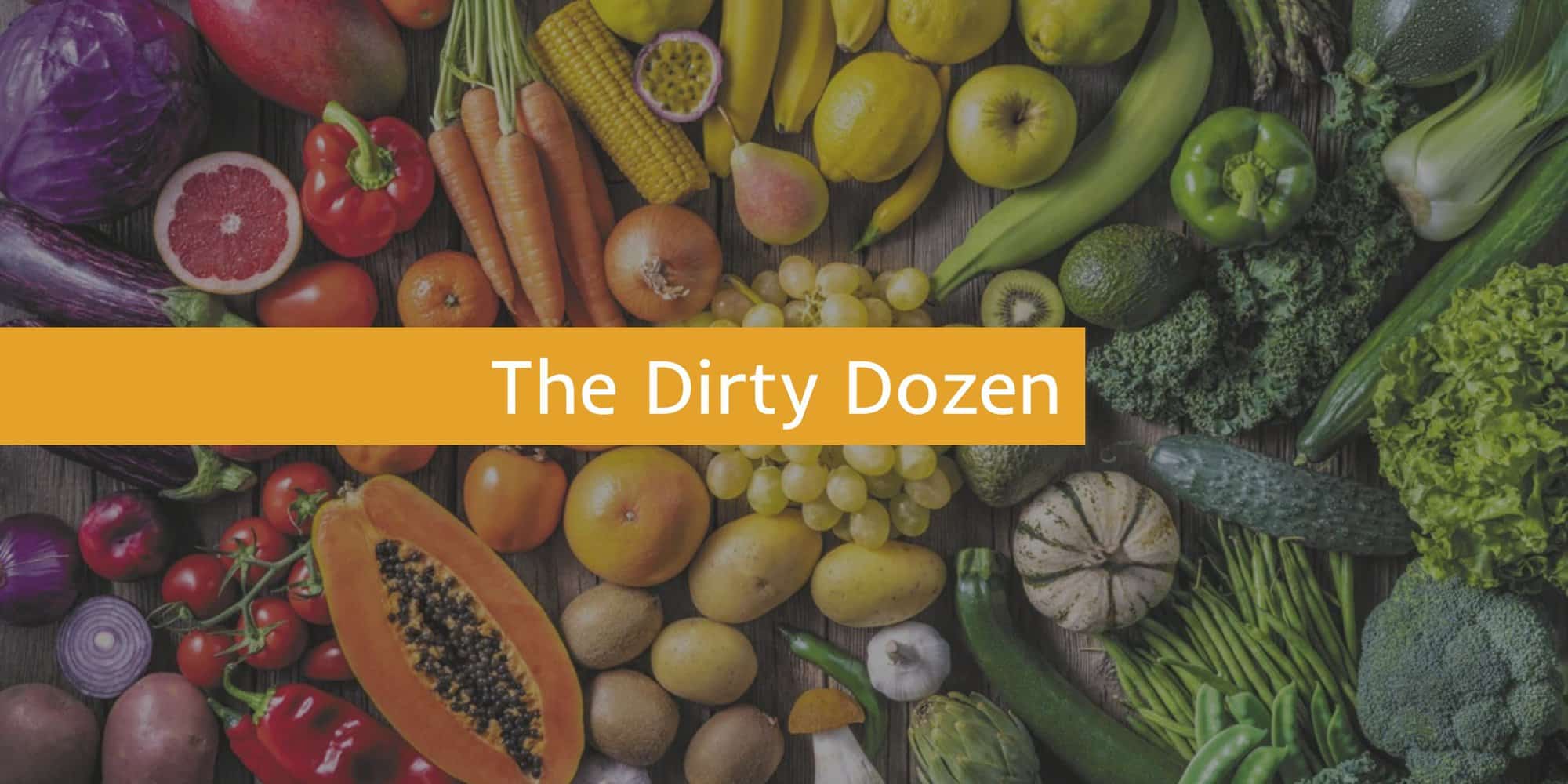
Have you heard of the 'Dirty Dozen'? In this case, it’s not the famous 60's war movie, but rather a guide to the 12 fresh non-organic fruits and vegetables with the highest residue of pesticides.
Produced annually by PAN (the Pesticides Action Network) UK, this invaluable report is a must-read to ensure the food you eat is as nutritious as possible.
Eating foods that have been heavily treated with pesticides, can substantially reduce their nutritional value, and potentially cause deficiencies of essential vitamins and minerals (read more about the impact of modern agricultural practices on food's nutritional values here: Why Fruit & Veg is Less Nutritious Than It Used To Be). But that's not all, it could also harm your long term health too. Increasing the risks of developing cancer, triggering neurological issues like headaches, disrupting your endocrine system causing hormone imbalances, and damaging your vital organs.
Research shows eating a diet rich in foods treated with pesticides could pose a similar cancer risk to smoking tobacco! So it’s clear that if you want to take care of your health, it’s sensible to educate yourself about the foods that pose the biggest risks. So you can make an informed choice about what you eat, and which foods it might be worth considering an organic alternative for.
Doesn't the government check the levels of pesticides in foods are safe?
As you'd expect, the government has strict rules around which pesticides can be used and how. DEFRA also has a quarterly monitoring programme, which checks the pesticide residue level in UK-grown and imported food. However, PAN has noticed that the government frequently selects a different list of produce for testing each year. This means that often produce with high levels of multiple pesticide residues in one year isn't always tested in subsequent years. So the monitoring programme's results don't always pick up long-term trends that show which produce repeatedly has the highest levels of pesticides.
Thankfully, PAN has come up trumps by compiling a list that looks at the worst culprits over the past six years. This provides a more comprehensive picture of which foods contain the most pesticides.
What are the 'Dirty Dozen' foods treated with pesticides?
If you're a citrus fruit fan, you definitely might want to consider switching to buying organic produce (not treated with pesticides). Soft citrus fruit (such as tangerines and clementines) tops the Dirty Dozen list, with 96% of samples found to contain multiple residues of different pesticides. Second place goes to oranges, where 95% of samples were found to contain different pesticides. While lemons had a similarly worrying result: 89% of samples contained numerous pesticide residues.
Other kinds of everyday staples, that could be sitting in your fruit bowl right now, were also affected. 87% of the samples of grapes were found to contain pesticide residues and 81% of pears did.
Pulses like lentils were also included, with 63% of samples making the Dirty Dozen list. Various vegetables also made an appearance in the top 12. 38% of samples of both carrots and spring onions, 34% of peas, and 29% of beans. Dried beans like black-eyed beans don’t avoid the issue either, 35% of samples also contained the residue of different pesticides.
Are there any foods included that aren’t fruit and veg?
Yes, because this year PAN decided to include all products of ‘non animal’ origin in their research. Worryingly, the final inclusion in the list is something most of us eat every day: bread. Where evidence of multiple pesticides was found in more than half of the samples (54%)! Rice narrowly missed out on a place in the top 12, coming in at 13. So it’s also worth looking more closely at what type of rice you buy.
What action can you take to avoid pesticides in your food?
Washing and peeling your fruit and veg can help reduce the amount of pesticides, but PAN advises this technique won’t remove them entirely. This is because many pesticides are ‘systemic’. This means they were applied to the plant’s seeds, leaves, or soil, and absorbed within the produce.
If possible, the best way to limit your exposure is to buy organic foods whenever possible. Recent research by Breast Cancer UK showed that switching to organic could reduce pesticide exposure by up to 90%. Organic foods are considerably more expensive and not everyone can afford an entirely organic shop. This is where PANs research comes into its own. Helping you to choose organic alternatives for the foods with the highest pesticide residue levels.
If you can't buy organic, opt for locally grown, seasonal produce. This means the food is fresher and won't have travelled as far, so it's less likely to have been treated with as many preservatives and nasties. You could even get green-fingered and consider growing some of your own fruit and veg.
It’s also worth considering donating to PAN to support their work with farmers and supermarkets to tackle pesticide harms. Find out more here.
How else can you improve your diet and support your gut health?
There are so many things! Avoiding ultra-processed food wherever you can is a good start. Packed with additives, sugar, and salt, they won’t do your waistline, or your inflammation levels, any favours, and are also likely to contain very few nutrients.
A varied diet, packed with plenty of healthy protein, fruit, veg, and prebiotic and probiotic foods seems to be the approach most gut gurus advocate to support your overall health. If you’d like to learn more about this, our blog: 5 Ways To Improve Gut Health, has some helpful pointers on levelling up your gut health and looking after your microbiome – those all-important gut bacteria that have an impact on everything from digestion to immunity.
